kookaburra
Thursday, March 01, 2007
It is with deep sense of pride and honor, we are extending our sincerest and warmest congratulations to each and everyone.
Time flew so fast. Last year, we came to Maitum Sarangani Province to experience the many outdoor activities, project proposals and the many opportunities to hone our skills and attitude envisioned by Department of Education. This last February 9-11 again we are here at General Santos City High School as a venue for another exciting camp—the YES-O. We know that the organizers of this camp are preparing the campers for the world of work in the future. We were given that holistic kind of education and YES-O is just one; it was opened to us for the taking.
We are therefore commissioned to use it. Extend to others the assistance they need as they come to our way.
May the Lord guide us always as we make Mother Earth a better place to live with peace, love and unity for humanity towards catastrophes.
This years theme: ''Unity through Catastrophe'' speaks and conveys for a vision of tomorrow!
Rationale:
YES-O Camp is an outdoor activity designed to motivate members and advisers to carry our scientific activities. It features actual learning through observations, assessment and preparation of research proposals on scientific problems encountered by the environment.
Objectives:
GENERAL
To develop among participants a sense of unity through catastrophes.
SPECIFIC
1. To provide opportunities for learning, doing and self-discovery through environmental encounter.
2. To provide opportunities for development of positive leadership, social-consciousness and involvement in environmental management.
3. To promote camaraderie among members and advisers.
4. Provides awareness of the environment.
5. Elicit values for environmental protection.
6. provides group interaction.
7. recognizes individual worth and contribution.
THE CAMP. . .
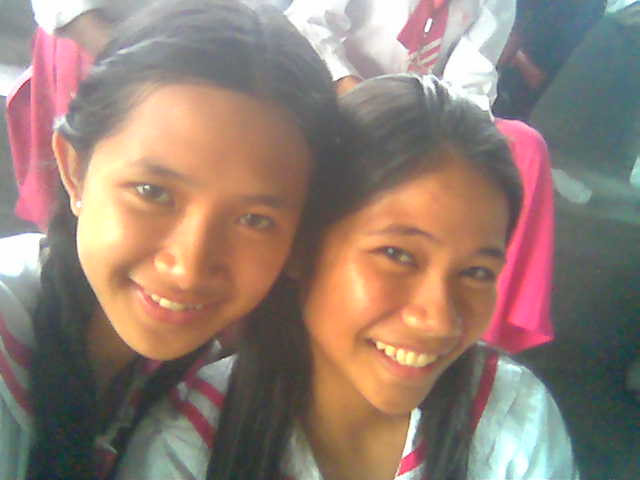
We are very lucky for we able to join this last camp nevertheless there are many factors which keep on discouraging us but we changed our minds and it is a great opportunity for each one to pool our ideas and desires to reach that goals stated above. Our camp is really great and a big, big fun for us! It's enjoyable. . especially in the field trip. . though the sun's rays burnt our skin, parched our throat and blinded our innocent eyes but anyway it’s a blaze of glory in fact! We enjoyed yes, the game. It develops camaraderie and teamwork for everybody. We have also that plenary session but honestly, it's boring. We felt sleepy but the great thing is we realized how humans became the great factor towards catastrophes facing us now.
It's exciting really! Thank God for his goodness and guidance for He made that memorable camp so great and successful.
The Nature's Wild Subcamps
TORNADO

Tornado (Latin, tonare, “to thunder”), in meteorology, violent whirling wind, characteristically accompanied by a funnel-shaped cloud extending down from a cumulonimbus cloud. Commonly known as a cyclone or twister, a tornado can be a few metres to about a kilometre wide where it touches the ground, with an average width of a few hundred metres. It can move over land for distances ranging from short hops to many kilometres, causing great damage wherever it descends. The funnel is made visible by the dust that is sucked up and by condensation of water droplets in the centre of the funnel. The same condensation process makes visible the generally weaker sea-going tornadoes, called waterspouts, which occur most frequently in tropical waters. Most tornadoes spin anticlockwise in the Northern hemisphere and clockwise in the Southern, but occasionally that pattern is reversed.
CYCLONE

Cyclone, in meteorology, an area of low atmospheric pressure surrounded by a wind system blowing (in the northern hemisphere) in an anticlockwise direction. A wind system blowing round a corresponding high-pressure area with clockwise winds is known as an anticyclone. In the southern hemisphere these wind directions are reversed. Cyclones are commonly called lows and anticyclones highs. The term cyclone has often been more loosely applied to a storm and disturbance attending such pressure systems, particularly violent tropical hurricanes and typhoons, which centre on areas of unusually low pressure.
EARTHQUAKE

Earthquake, vibrations produced in the Earth's crust when rocks in which elastic strain has been building up suddenly rupture, and then rebound. The vibrations can range from barely noticeable to catastrophically destructive. Earthquakes can release energy thousands of times greater than the world's first atomic bomb.
HURRICANE

Hurricane, name applied to migratory tropical cyclones that originate over oceans in certain regions near the equator, and particularly to those arising in the West Indian region, including the Caribbean Sea and the Gulf of Mexico. Hurricane-type cyclones in the western Pacific are known as typhoons.
AVALANCHE

Avalanche, sudden flow of a large mass of snow or ice down a slope or cliff, sometimes at speeds exceeding 160 km/hr (100 mph). Such flows can be destructive of life and property. Avalanches are most common on slopes exceeding 30°, frequently when a deep snow falls suddenly and does not have a chance to cohere, or when a thaw undercuts a blanket of older snow.
TSUNAMI

Tsunami, Japanese word meaning “harbour wave” and used as the scientific term for a seismic sea wave, a large ocean wave generated by an undersea earthquake. A tsunami is thought to be triggered when the ocean floor is tilted or offset during the quake, creating a set of waves similar to the concentric waves generated by an object dropped into water. Another possible cause is an undersea landslide or volcanic eruption. Most tsunamis originate along the so-called Ring of Fire, a zone of volcanoes and seismic activity, 32,500 km (24,000 mi) long, that encircles the Pacific Ocean.
Inspirational Message
''There is a time for everything and a reason for every activity under heaven; a time to be born and a time to die; a time to plant and a time to uproot; a time to kill and a time to heal; a time to tear down and a time to build; a time to weep and a time to laugh; a time to mourn and a time to dance; a time to scatter stones and a time to gather them; a time to embrace and a time to refrain; a time to search and a time to give up; a time to keep and a time to throw away; a time to tear and a time to mend; a time to be silent and a time to speak; a time to lave and a time to hate; a time for war and a time for peace!''
Mabuhay tayong Lahat!